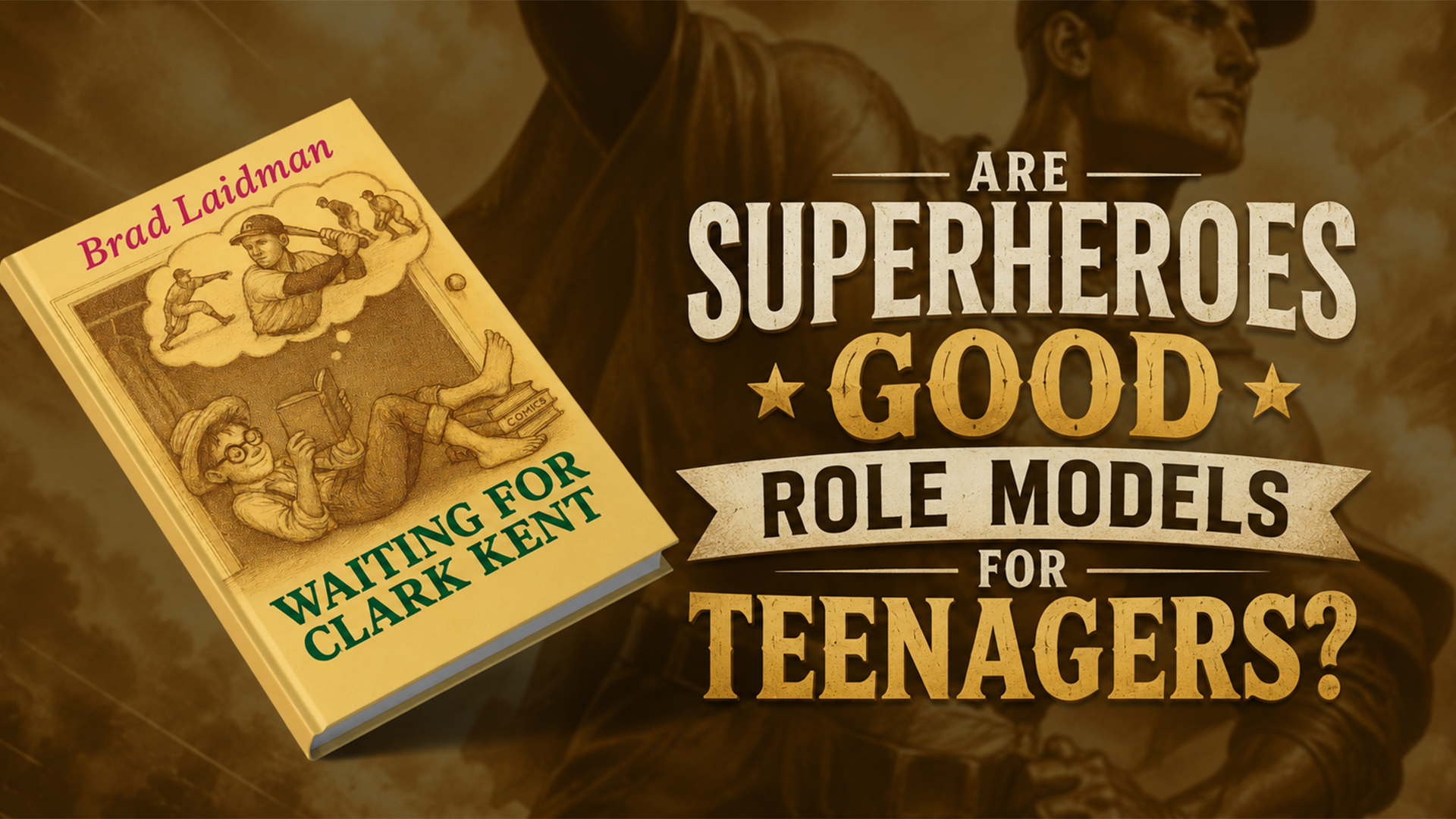
Teenagers probably should not take life advice from adults wearing capes.
Then again, adults wearing ties have not exactly done a flawless job with civilization.
The question of whether superheroes make good role models sounds simple until you look at the available evidence. Superman lies about who he is every day. Batman processes childhood trauma by dressing like a flying mammal and punching criminals after midnight. Spider-Man is perpetually late, broke, guilt-ridden, and one emotional collapse away from missing another important appointment.
And yet, teenagers keep finding something useful in them.
Maybe that is because teenagers already understand the basic superhero condition better than most adults do. They wake up in bodies they do not fully recognize. They are expected to hide half of what they feel. They are told they are special and then graded against everyone else. They are asked to become themselves while being punished whenever that self becomes inconvenient.
In other words, adolescence is not far removed from being bitten by a radioactive spider. There are fewer skyscrapers, but roughly the same amount of panic.
The Trouble with Perfect Heroes
A perfect superhero is a terrible role model.
Perfection is mostly propaganda with good lighting. A teenager looking at an invulnerable, endlessly confident hero may not feel inspired. They may simply feel defective.
Real adolescence is acne, heartbreak, boredom, bad decisions, loneliness, and the vague suspicion that everybody else received an instruction manual. A hero who always knows the right thing to do belongs less to human experience than to an expensive motivational poster.
The more interesting superheroes are not admirable because they are powerful. They are admirable because power does not rescue them from confusion.
Clark Kent can lift a car, outrun a train, and survive things that would turn the rest of us into a brief item in the local newspaper. None of that tells him how to belong. Strength cannot explain first love. X-ray vision does not reveal whether someone truly understands you. Flying does not prevent loneliness. It merely gives loneliness a better view.
That is the part teenagers may recognize.
A young person can be talented, intelligent, athletic, attractive, or unusually capable and still feel like an alien standing in the wrong hallway. Power does not guarantee peace. Sometimes it simply gives a person more elaborate ways to hide.
The Mask Is the Point
Adults often worry that superheroes encourage fantasy. This is true, but adults encourage mortgages, office politics, and pretending to enjoy networking events, so fantasy should not be dismissed too quickly.
The mask matters because teenagers already wear one.
They act differently with parents, teachers, friends, strangers, and the person they secretly hope will notice them. Identity at that age is not a finished statue. It is wet cement with footprints all over it.
Superhero stories give that confusion a visible form. There is the public face and the private one. There is the person everyone sees and the person nobody quite knows. Clark Kent is not merely a disguise, nor is Superman. Both are pieces of the same divided person trying to survive public expectations.
That can be useful for teenagers, provided the lesson is not that they should conceal themselves forever. A mask may protect you while you are figuring things out. It should not become your permanent address.
The best superhero stories understand that identity is not discovered once and polished like a trophy. It is revised, contradicted, lost, performed, and occasionally recovered after several embarrassing chapters.
Power Is Not Character
Teenagers are surrounded by stories that confuse power with worth.
Fame becomes proof of importance. Wealth becomes proof of intelligence. Popularity becomes proof of goodness. The loudest person in the room is assumed to be the strongest, which would make every malfunctioning car alarm a philosopher-king.
Superheroes can reinforce this nonsense, especially when every problem ends with a larger beam of light crashing into another beam of light. But the better stories resist it.
What matters is not whether a hero can dominate someone. What matters is what they refuse to become.
Superman is most interesting when he could rule the world and chooses not to. Spider-Man matters because he keeps helping people even when his reward is injury, debt, suspicion, and another ruined evening. Batman becomes compelling when the story admits that discipline and obsession are cousins who should not be left alone together.
Teenagers do not need models of absolute control. They need examples of restraint, responsibility, recovery, and empathy.
They also need permission to question the hero.
A role model should not be an object of worship. Worship makes people intellectually lazy. The useful question is not, “How can I become exactly like this character?” It is, “What does this character reveal about fear, anger, loyalty, loneliness, and the choices people make when nobody can stop them?”
Failure Is More Useful Than Victory
A superhero who never fails is merely a parade balloon.
Failure gives the story weight. It also gives teenagers something they can actually use.
Most young people will not save a city. They will fail a test, lose a game, say something cruel, trust the wrong person, get rejected, disappoint someone they love, or become briefly convinced that one humiliating afternoon has destroyed the entire future.
Superhero stories can show that failure is not always a verdict. Sometimes it is information delivered with unnecessary violence.
Peter Parker fails constantly. His life is practically an administrative error with webbing. Clark Kent, for all his impossible gifts, can still misunderstand people, mishandle love, or discover that being able to prevent disaster does not mean knowing what a life should mean.
That is a healthier lesson than invincibility.
Teenagers need to see that goodness is not a permanent achievement. It is a repeated decision, often made while tired, angry, embarrassed, or uncertain.
So, Are They Good Role Models?
Some are. Some are appalling. Most are both, depending on the issue and the writer.
Superheroes are useful role models when they teach teenagers that strength without empathy is just another form of danger. They are useful when they make room for grief, awkwardness, moral uncertainty, and the humiliating work of becoming a person. They are useful when they show that being different can be painful without making difference itself a disease.
They become useless when they reduce every problem to winning, destiny, superiority, or the fantasy that one exceptional individual can repair a broken world without understanding anyone in it.
Teenagers do not need superheroes because superheroes are perfect.
They need them because the best ones are stranded between what they can do and who they hope to be.
That is not merely a superhero problem.
It may be the human problem wearing brighter clothes.